
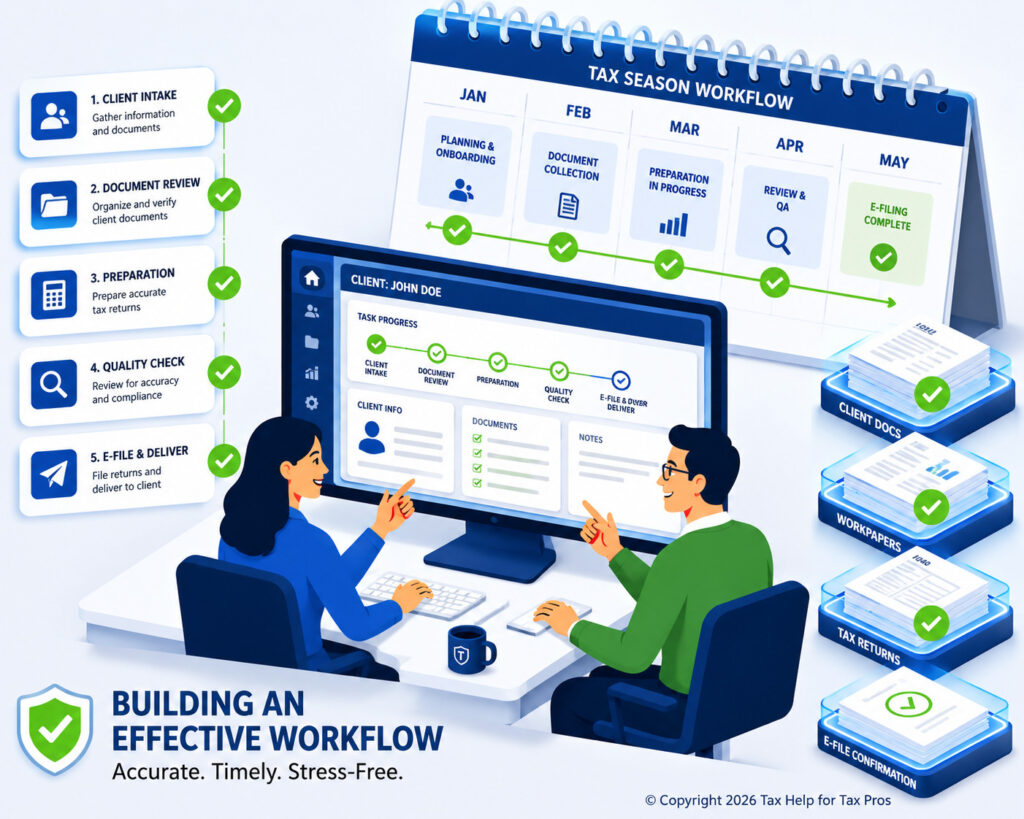
Building an Effective Workflow: How Tax Firms Keep Returns Accurate, Timely, and Stress-Free
Running a tax firm isn’t just about entering numbers into software. It’s about building a process that keeps clients informed, keeps work organized, and keeps the IRS happy. Whether you’re just launching your practice or fine-tuning an existing one, the backbone of any successful firm is a strong workflow. When your systems run smoothly, clients feel confident, returns stay accurate, and tax season becomes far more manageable.
Every firm eventually develops its own style, but most follow a predictable path. Here’s a closer look at what that path looks like and why each step matters.
Starting the Relationship: Client Intake and Onboarding
A reliable process begins before the first document arrives. When a client reaches out for help, the intake stage sets the tone for everything that follows. Most firms start with a consultation, follow up with a welcome packet, and send engagement letters and pricing so there are no surprises later. Clients are given access to a secure portal, their identity is verified, and prior-year returns are reviewed to uncover any potential issues. Once the client is entered into the firm’s workflow system and deadlines are confirmed, everyone knows what to expect and when the work will begin.
Gathering the Right Documents
Tax preparation is only as good as the information provided. That’s why the document-collection stage is critical. Firms typically request forms such as W-2s, 1099s, 1098s, K-1s, and business financials through a secure portal. The preparer reviews what comes in, makes notes about anything missing, and follows up with the client before moving forward. Organizing documents by year, entity, or type helps maintain consistency and prevents confusion—especially when dealing with complex financial situations.
Preparing the Return with Accuracy in Mind
Once all the information is gathered, the real work begins. During preparation, the tax professional enters the data, reconciles income, reviews prior-year returns, and double-checks anything that doesn’t look right. Clear communication with the client continues throughout this stage, especially if clarification is needed. Workpapers are created to support the entries, and error-checking tools inside the software help ensure nothing has been overlooked. Many firms use a “prepare, review, finalize” structure to keep quality consistent, especially as the team grows.
Quality Review: The Firm’s Most Important Safeguard
No matter how experienced the preparer is, a second look is one of the best protections a tax firm can build into its system. The review stage is where the return is analyzed for accuracy, completeness, and compliance. The reviewer confirms that all forms were entered properly, major deductions and credits make sense, and carryovers were handled correctly. This is also where due diligence requirements come into play. Items such as Form 8867, identity verification, and documentation of client interviews are evaluated carefully. A strong review process protects both the client and the firm.
Client Approval and Final Sign-Off
Before any return is filed, the client should have a chance to review it. This step is not only good practice but also an important layer of protection. The firm provides a draft copy, answers questions, and makes any necessary revisions. Once the client is satisfied, e-signature forms such as Form 8879 are sent for approval, and the firm confirms details like routing and account numbers for refunds or balance-due payments. Proper documentation of the client’s approval is saved for the firm’s records.
E-Filing and Submission Tracking
With approval secured, the return is ready to be filed. The firm submits the return electronically and watches for acceptance notices from the IRS and applicable states. If a return is rejected, the firm corrects the issue promptly and resubmits it. This stage may seem administrative, but it is crucial for ensuring the client’s return is officially filed and processed on time.
Delivering Final Documents to the Client
After the return is accepted, the firm uploads the final copy, acceptance letters, and any relevant payment or refund instructions. Many firms also provide a summary highlighting key items such as the balance due, refund amount, or next steps for estimated taxes. This final communication helps clients stay informed and often opens the door for additional planning conversations throughout the year.
Billing and Payment Management
A tax firm’s workflow must also include a clear billing process. Some firms require payment before work begins, while others invoice at draft delivery or after final filing. Consistent billing practices help reduce confusion and ensure a steady cash flow. Invoices are issued, payments are tracked, and follow-ups are handled professionally. A predictable system keeps financial operations running as smoothly as tax preparation itself.
Year-Round Support and Maintenance
A modern tax firm doesn’t only operate from January through April. Year-round processes such as IRS notice assistance, document updates, estimated tax reminders, and mid-year planning meetings help maintain strong client relationships. Firms also analyze what worked well—and what didn’t—during the busy season so they can improve their systems for the year ahead.
Keeping the Firm Compliant and Secure
Behind the scenes, administrative work keeps the firm protected. This includes maintaining the EFIN and PTIN, completing continuing education, keeping security plans up to date, and ensuring all data is stored securely. Updating internal policies and refining checklists are also part of ongoing compliance. These efforts help safeguard the firm’s reputation and support long-term growth.
Conclusion
A great tax firm is built on more than technical skills. It’s built on processes that protect the preparer, guide the client, and ensure accuracy at every step. By developing a structured workflow—from intake and document collection through filing and year-round support—firms create a smooth experience that clients can depend on year after year. When your systems work, everything else falls into place.