
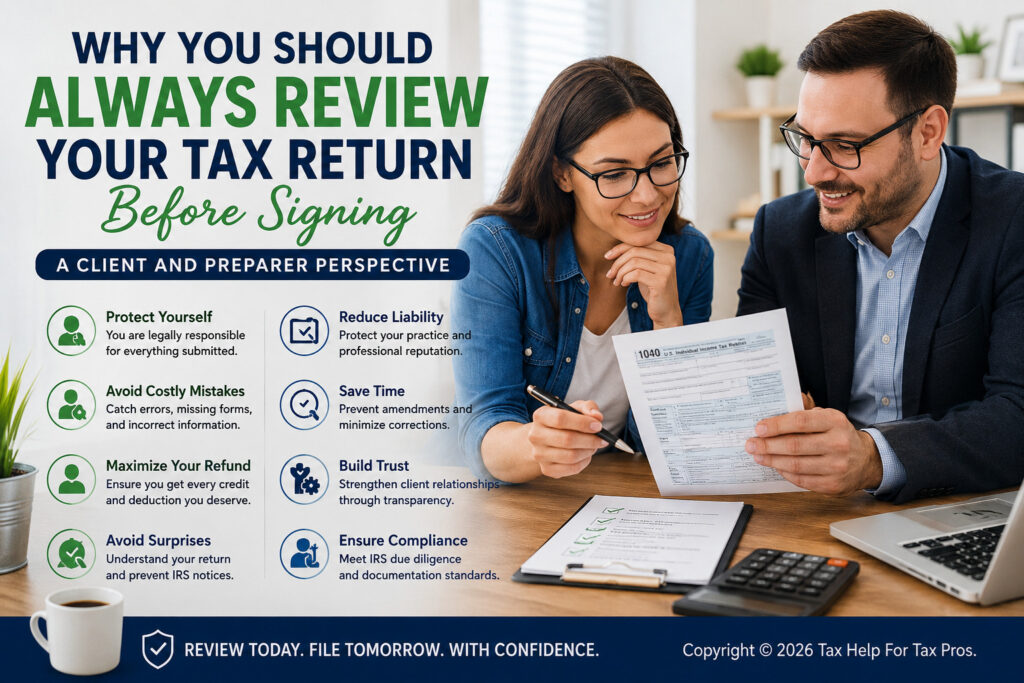
Why You Should Always Review Your Tax Return Before Signing: A Client and Preparer Perspective
At the end of every tax season, countless returns are filed without the client ever looking past the first page. It’s easy to assume that once a tax professional has done the work, all you need to do is sign and send. But whether you’re a taxpayer or a preparer, reviewing the return before it’s finalized is one of the most important steps in the entire process. At Wilson Rogers, we encourage clients to understand what they’re signing—and we encourage preparers to make review a standard part of their workflow.
Here’s why the review matters from both sides of the table.
From the Client’s Perspective
You Are Legally Responsible for Everything Submitted
Even if a preparer completes your return, the IRS sees you as the taxpayer. Your signature confirms that all information is complete and accurate. If something is wrong—incorrect income, missing forms, math errors—you may face delays, notices, or penalties. A quick review protects you from signing off on mistakes that could become your problem later.
Your Personal Information Must Be Correct
Incorrect Social Security numbers, birthdates, or bank account information are some of the fastest ways to trigger rejections or delayed refunds. You know your personal details better than anyone. A few minutes of review can prevent weeks of avoidable frustration.
Only You Know the Full Picture
Preparers rely on the information you provide. If something was forgotten—a missing W-2, side income, childcare expenses, education costs—it may not appear in the return. Reviewing gives you a chance to catch what wasn’t included before the return becomes official.
You Want Every Credit and Deduction You’re Entitled To
A review allows you to confirm your dependents, income, deductions, and credits are entered correctly. Missing information can cost you money, and incorrect information can lead to audits. Reviewing helps you protect your refund and ensures you’re not overpaying.
You Avoid Surprises
Reviewing the return gives you clarity on why you owe or why you’re expecting a refund. Understanding what’s being filed in your name prevents surprises—especially those that come in the form of IRS letters.
From the Tax Preparer’s Perspective
It Reduces Liability and Protects Your Practice
A signed return with errors can quickly turn into a dispute. Reviewing the return with your client ensures they confirm the accuracy of the information before you file. It protects your reputation, your relationship with the client, and the integrity of your work.
It Confirms the Client Provided Full and Correct Information
Preparers can only enter what the client hands over. Reviewing the return together ensures the client acknowledges that the income, documents, and details are complete. This helps prevent amended returns and unnecessary backtracking.
It Minimizes Corrections and Saves Time
Amending returns takes time, delays refunds, and interrupts your workflow. A thorough review upfront is far more efficient than fixing errors after the return has already been filed.
It Builds Trust and Transparency
Walking clients through their tax return demonstrates professionalism and strengthens the client relationship. When clients understand what’s happening, they feel confident in your work—and that confidence leads to long-term loyalty.
It Supports IRS Due Diligence Requirements
Preparers are required to meet due diligence standards for credits such as the EITC, CTC, AOTC, and for filing statuses like Head of Household. Reviewing the return with the client helps document that you’ve met those obligations and reinforces compliance.
It’s an Educational Opportunity
A review gives preparers a chance to explain what changed from last year, how certain numbers were calculated, and what the client can do to improve their tax situation moving forward. Educated clients make better decisions, keep better records, and become stronger partners in the tax process.
Final Thoughts
Reviewing a tax return before signing isn’t just an administrative step—it’s a safeguard. For clients, it prevents costly mistakes and ensures their financial story is accurately represented. For preparers, it protects your practice, reduces risk, and strengthens trust.
In the end, both sides benefit from taking a moment to slow down, review carefully, and file confidently. If accuracy, transparency, and peace of mind matter—and they always do—then reviewing your return before signing should be a non-negotiable part of every tax season.