
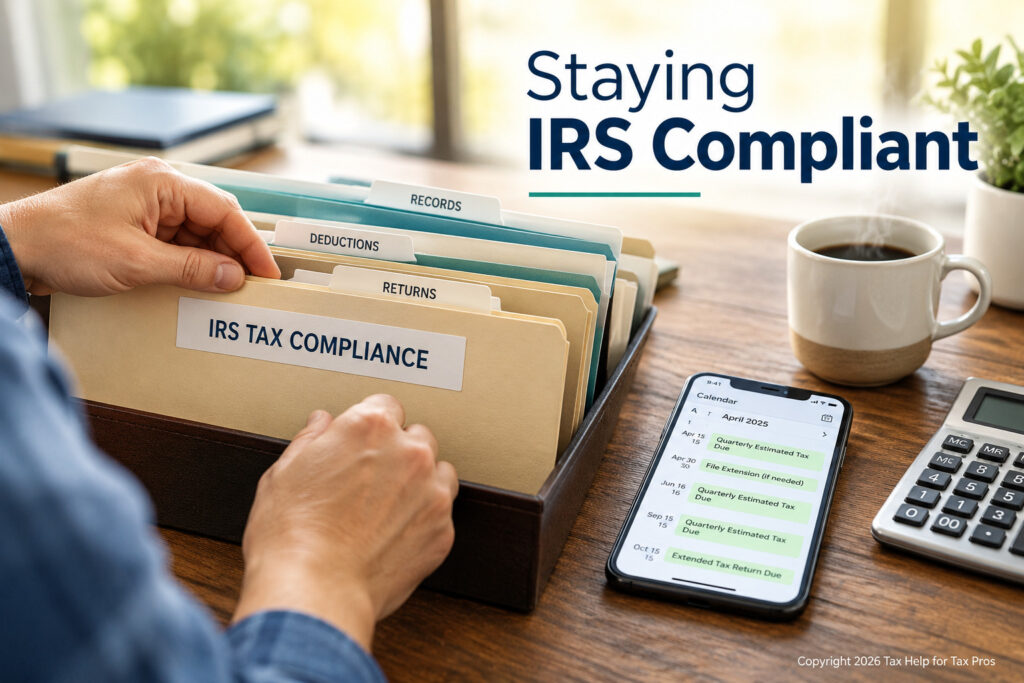
Launching a tax firm is exciting, but it also comes with a weighty responsibility: ensuring every return you prepare complies fully with IRS regulations. Compliance isn’t just about avoiding penalties—it’s about protecting your clients, your practice, and your professional reputation. Embedding strong compliance practices from day one sets the stage for a credible and sustainable business.
Here’s a practical framework to guide new tax professionals in building and maintaining a compliant practice.
Obtain and Maintain Proper Credentials
Before preparing returns for clients, it’s essential to meet all regulatory requirements. Every tax preparer submitting federal returns must have a Preparer Tax Identification Number (PTIN), which needs annual renewal. Beyond that, professional certifications such as Enrolled Agent (EA) or Certified Public Accountant (CPA) enhance credibility and provide unlimited representation rights before the IRS.
Some states also have additional licensing requirements for tax preparers. To remain fully compliant, verify the regulations in your jurisdiction. In short, obtaining and maintaining the proper credentials is the foundation of a legitimate and professional tax practice.
Key credentials to prioritize:
- PTIN (mandatory for federal return preparation)
- EA or CPA designation for advanced representation rights
- Any state-specific preparer licenses
Collect Accurate Client Information
Accurate returns start with accurate data. Collecting complete client information is crucial, from Social Security numbers and addresses to all income sources and deduction documentation. Review prior-year returns for carryovers, such as capital losses or unused credits, to ensure nothing is missed. Even small discrepancies in client information can trigger audits or delays, so diligence at this stage is critical.
Essential information to gather includes:
- Names, Social Security numbers, and addresses for taxpayers and dependents
- Income documentation: W-2s, 1099s, SSA-1099, investment statements, and rental income
- Deduction and credit records: charitable contributions, medical expenses, mortgage interest, education costs
- Prior-year returns for carryovers and consistency
File the Correct Forms on Time
Timely and accurate filing is non-negotiable. Federal deadlines include April 15 for individual returns and March 15 for partnerships and S-Corps. Be sure to include all required schedules and attachments to substantiate income, deductions, and credits. State returns should also comply with local regulations. While extensions can provide additional time to file, they do not extend payment deadlines. Missing deadlines or submitting incorrect forms can compromise compliance and result in penalties.
Maintain Organized and Secure Records
Strong record-keeping practices support both accuracy and audit readiness. Retain all supporting documentation for a minimum of three years, and seven years for certain items. Organize records by income, deductions, credits, and payments, and use secure digital storage with encryption and backups. Keeping prior-year returns accessible for reference also ensures you can verify information when needed. Proper documentation is not only a compliance safeguard but also a hallmark of a professional practice.
Report Income and Deductions Accurately
Reporting all income sources and claiming only legitimate deductions reduces audit exposure and protects your clients. Include wages, self-employment income, investment income, and other miscellaneous earnings. Reconcile totals from W-2s, 1099s, and other income statements with the final return, and compare current filings with prior-year returns to avoid red flags. Precision in reporting reinforces your credibility and minimizes client risk.
Stay Current on Tax Law Changes
Tax regulations change constantly. Staying informed is essential for accurate compliance. Monitor IRS updates, notices, and revenue procedures, and participate in continuing education programs to maintain certifications and PTIN eligibility. Annual updates can affect credits, deductions, and filing requirements, so proactive awareness ensures that you file accurate returns and demonstrate professionalism to your clients.
Protect Client Data and Firm Security
Handling sensitive client information responsibly is a critical aspect of compliance. Using secure client portals and encrypted communication for document transfers, implementing strong password policies and two-factor authentication, and training staff on cybersecurity best practices are all necessary measures. Additionally, maintaining professional liability insurance helps protect your firm against potential errors or data breaches.
Respond Promptly to IRS Notices
Even with careful preparation, IRS notices can occur. Compliance requires timely and measured responses. Review the notice carefully, verify the information against your records, and gather supporting documentation before responding by the stated deadline. For more complex issues, consider professional representation to communicate effectively with the IRS. Prompt and thorough responses protect your clients and maintain their trust.
Implement Internal Controls
Efficient internal processes reduce errors and support ongoing compliance. Keep personal and business finances separate, track income and expenses using reliable accounting software, and reconcile accounts regularly. Reviewing returns before submission and conducting internal quality checks for staff-prepared returns reinforces accuracy. These internal controls not only minimize risk but also demonstrate a commitment to professional standards.
Final Thoughts
Compliance is the cornerstone of a successful tax practice. Accurate records, timely filing, proper documentation, and ongoing education protect both clients and your business. From obtaining credentials to implementing internal controls, each step strengthens trust and ensures your firm operates at the highest professional standard.
Compliance isn’t optional—it defines your credibility and reputation. By embedding these practices from the start, you create a foundation for sustainable growth, client confidence, and long-term success in your tax career.